Draft Assistant
Rookies & Sophomores
26–27 fantasy projections and draft range estimates for the top rookies and second-year players. ADP and team fits reflect the completed 2026 NBA Draft and off-season moves.
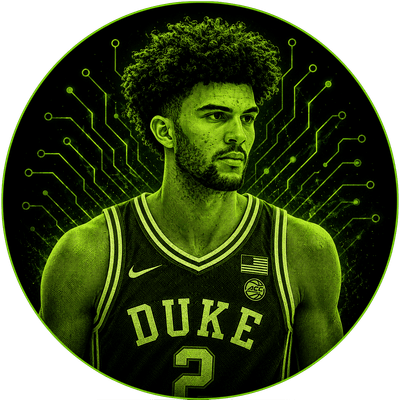
The #3 pick and the rare rookie handed a focal-point role — MEM starts him at PF with immediate usage next to Zach Edey. The college résumé backs it: 22.0/10.3/4.1 with 1.4 STL and .559 FG at Duke, ACC Player AND Rookie of the Year. Then he won Vegas: a 23/6/4 opener and a run to the Summer League final, with the three-ball falling (3-of-7 in the title game) — the one swing skill scouts still doubted. 0.6 BLK is the last frontcourt quibble.
The lowest-variance line in the class and the safest standard-league rookie pick — efficient scoring, real rebounds, a clean free-throw stroke, and enough STL and AST to fill a box score with no category hole. A focal-point role on a rebuild puts a near-20/10 season in range as a rookie, and the broad coverage breaks nothing but a Punt FG% or BLK builds. Summer League only firmed up the floor and the ROY case, and the outside shot that would push him toward top-75 looked real in Vegas. Draft him R5–R7 for a top-100 floor from night one.
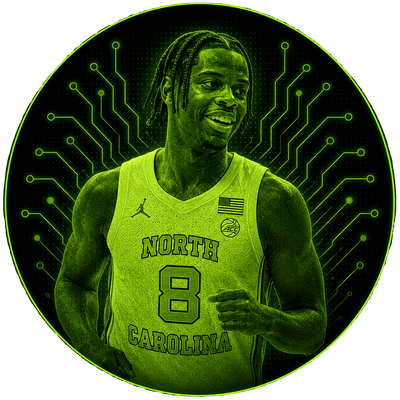
The #4 pick called his own shot for Rookie of the Year on draft night — then spent July backing it up. Wilson was one of the best players in Las Vegas: a 35-point debut against Boozer's Grizzlies and a run averaging roughly 24 points, 7 boards, and better than 3 blocks a game, with the outside shot suddenly falling. CHI's young core (Giddey, Buzelis, Essengue, Dillingham, all 24 or under) leaves no entrenched veteran blocking a path to 30+ MPG.
The cat shape is the draw — stocks and boards from a forward are a genuine differentiator in this class — and Summer League answered the one real question by flashing a jumper that looked nothing like the broken college stroke. Temper it: Vegas isn't the NBA, and a young Bulls rotation still has to hand him the minutes and shots. But the profile jumped from dynasty stash to live redraft target. Draft him R7–R9 as the class's best bet to beat his slot, with top-75 upside if the shot travels into the season.
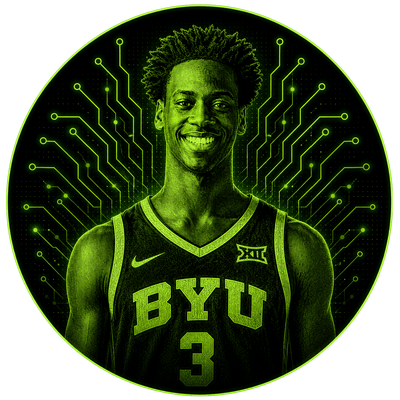
The #1 overall pick and the biggest name in the class — 25.5 PPG as a BYU freshman, third-most ever by a D1 frosh. He starts at SF for WAS and scores from day one; his 27-point Summer League debut (tied for the most ever by a No. 1 pick in a first Vegas game) left no doubt about the bucket-getting. But Anthony Davis and Trae Young own the usage, and the efficiency lagged in college (33.1% from three, 0.3 BLK).
He'll score in volume from day one — Vegas proved that much — but rookie-level efficiency, turnovers, and thin peripheral cats make for a weak 9-cat line under the gaudy points. This is the class's clearest name-over-value gap: he'll go R9–R11 on the #1-pick halo, and the category profile won't return it year one. Let someone else pay the hype tax — he's a points-league asset more than a 9-cat one.
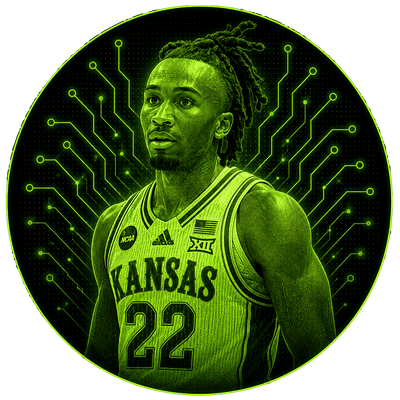
The #2 pick, slotted as a starting guard next to Keyonte George — ESPN's highest-upside scorer in the class, with 20-PPG flashes. His Kansas line was 20.2/4.2/1.6 with 1.4 STL on 38.2% from three before a cramping/illness issue cost him 11 games, and he answered in Vegas with 24 points in a Summer League duel against Dybantsa. A crowded UTA frontcourt (Markkanen, JJJ) and Keyonte's on-ball reps cap the rookie volume.
A tidy scoring-guard shape — points, threes, steals, and a clean free-throw line if the minutes hold. The bucket-getting is real, but the assist count is light for a lead guard and the efficiency can drag a percentage build. He'll go R9–R11 on draft-slot name; the value is a mid-round dart throw with top-80 upside if Keyonte cedes the ball.
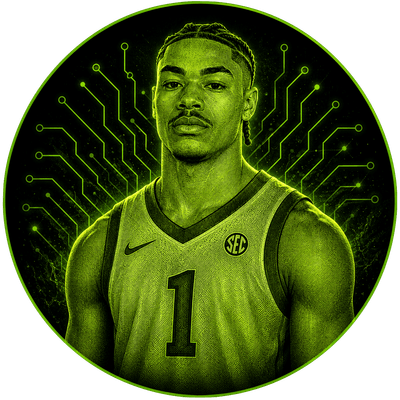
SEC Player of the Year and Bob Cousy Award winner — Acuff led the conference in scoring (23.5) and assists (6.4) at Arkansas, the first D1 player with 800 points and 200 assists in a season since Ja Morant. SAC took him #7 into a full rebuild, and the reporting already has him as the primary scoring option from day one, even with DeRozan and Sabonis on the roster. Summer League was the thesis in miniature: ~21 points and near-5 assists a night, but on 35% shooting with almost 4 turnovers. The flags are real: a 6'3" frame and on-ball defense that was a documented weakness all year.
The billing is loud — 'box office,' a live Rookie-of-the-Year betting pick — and a rebuild handing a rookie the keys is exactly the usage managers chase. But the same profile carries 9-cat baggage that Vegas underlined: turnovers from a high-usage lead guard, efficiency that still has to translate, and size that caps the defensive cats. The most boom-bust of the flyers — an R11–R12 swing on the scoring-and-assists upside, with a turnover-prone, punt-dependent floor if the efficiency never arrives.
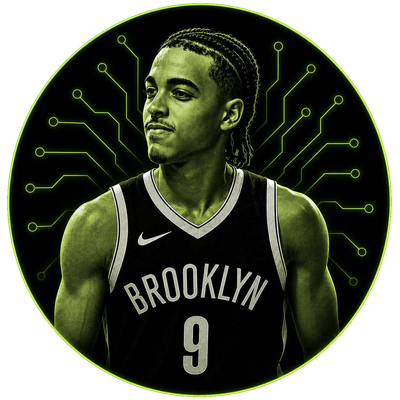
The #6 overall pick, out of Louisville and into a Brooklyn backcourt with no entrenched lead guard in front of him — a rebuild that can hand him on-ball reps from night one. The college tape is loud: 18/3/5 on 41/34/84 splits as a one-and-done freshman, ACC All-Rookie, and a 45-point night against NC State that set the ACC freshman scoring record. The asterisk is health — a balky back held him to 21 games at Louisville, though he reportedly cleared it during the pre-draft process.
A high-usage lead-guard shape — scoring, real AST, threes, and enough STL to matter — but rookie efficiency and a heavy turnover count weigh the 9-cat line down beneath the counting stats. Summer League flashed the bull case: efficient scoring and better than 45% from three across his Vegas run, even as the turnovers stayed. Brooklyn's empty depth chart does the rest — hand him 30-plus minutes and the assists and 3PM play in any format. He still projects outside standard-league range year one, so treat him as a dynasty stash wearing a redraft jersey — a deep R12–R13 flyer where a confirmed lead-guard role, not the draft slot, is your buy signal.

One of the best rookie fantasy seasons in recent memory. Flagg didn't need a crutch category — he just produced everywhere, every night. 21 points, 6.7 rebounds, 4.5 assists, 1.2 steals, 0.9 blocks, 46.8% FG across 70 games — and he's only 19! Dallas gave him a central role from day one and he never gave it back. The last 30 days were the real statement: 24.8/6.6/5.3/1.4/1.1, top-15 in the entire league. The only thing missing is the three-ball at 1.0 per game — everything else is already elite.
His role in Dallas is indisputable — heavy minutes, ball in his hands, no asterisk. The fantasy DNA is all there: stocks, rebounds, assists, scoring, non-destructive percentages. He's entering Tatum/Ant territory — and he got there without fully optimized NBA efficiency yet. Year-2 stat line could look like 25-7-5, 1.5 steals, 1.1 blocks with improved FT%. Floor is top-20, upside is top-12. Target him in picks 10–18 in competitive leagues. If the hype gets silly and someone takes him top-8, it wouldn't even be insane.

18.5 PPG, 3.4 threes, 86.3% FT across 81 games as a starter in Charlotte — Knueppel announced himself as one of the best three-point shooters in the league right out of the gate. The volume, the efficiency, the shot off the dribble — all of it translated immediately. Low turnovers and good FG% round out a profile that fantasy managers love to plug into a build.
He's going to remain one of the premier shooting threats in the league — that's not going anywhere. The 9-cat ceiling question is the defensive end, where the stocks simply aren't there yet. But Charlotte just cleared his runway: with LaMelo Ball traded out, the on-ball reps and usage he needs to add assists and shot volume are suddenly up for grabs. Reasonable expectation is top-45 to top-60, with top-35 in reach if he seizes those lead-guard minutes. 'Boring player everyone wishes they drafted after two months' is still the floor.
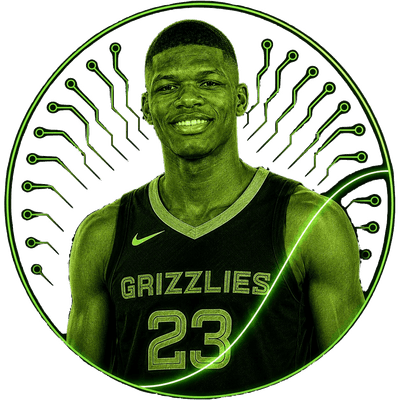
Finished 156th on the season, 119th over the last 30 — quietly trending in the right direction. Sneaky interesting rookie year. Coward checked all the boxes for the efficient wing archetype: 47.1% FG, 84.3% FT, 1.5 threes, contributions across points, boards, and assists with low turnovers. Not a usage hog, rarely a liability. Those players often become year-2 fantasy glue guys.
The ceiling question is the only real debate — does he become a 18-7-4 player or stay at 13-5-2? That difference is massive. Reasonable expectation is top-90 range, with top-70 upside if steals and threes rise together. Sharp managers quietly take him while casuals chase upside. Round 8–9 is exactly the right price.
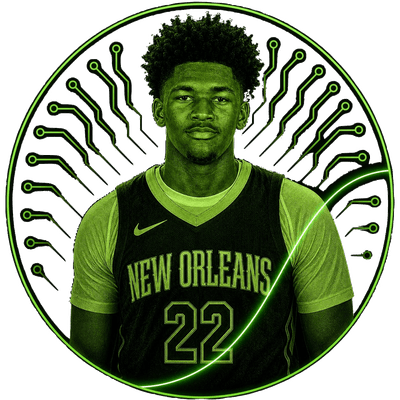
A flat rookie year in New Orleans — Queen flashed in stretches and the rebounding was real, but consistent production never showed up. The tools are there; the role and the reliability weren't yet.
His fantasy value lives and dies with playing time in New Orleans, and the minutes picture is genuinely unclear. Top-90 to top-110 is the realistic band, with top-70 upside if minutes jump meaningfully. Round 9–10 is fair. Much more attractive in points leagues than 9-cat.

11.8/3.4/3.9 with 0.8 STL on .505 FG, .343 3P, .756 FT across 69 games as a 19-year-old rookie. Started just 4 regular-season games behind Fox and Devin Vassell — the raw production finished outside the top-200 in 9-cat (rank ~209), purely a function of 22.6 MPG. The talent showed in the playoffs: promoted to the starting lineup when Fox went down with an ankle injury, then dropped 24/11/6 with 7 STL on OKC in Game 1 of the Western Conference Finals. All-Rookie First Team is a real signal — second-overall picks who post a per-36 19-6-6 line as 19-year-olds aren't common.
Talent and pedigree are not in question; the year-2 fantasy bet is entirely about role. As the bench guard he is now, he doesn't crack the top-150 in 9-cat. The path to relevance is Fox ceding minutes — Fox is 28 with an ankle history, and Mitch Johnson trusted Harper enough to start him deep in the playoffs. That's the flyer thesis: a R10–R11 pick where the downside is small and the upside is a real fantasy starter if the lead-guard reps open up. Don't reach in single-digit rounds; let him come to you late.
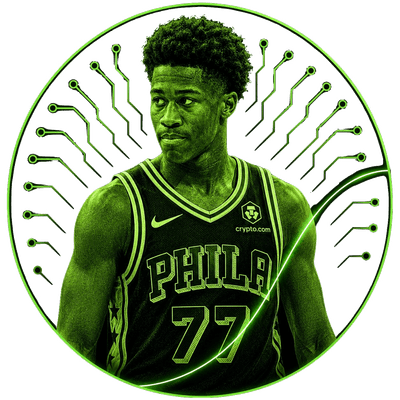
Finished the season ranked 62nd overall — then closed at 39th over the last 30 days. That late surge was the whole bull case: athleticism that translated immediately on defense, plus an offensive game still coming together against real competition, not empty-tank stats. On talent alone he looked like the group's best breakout bet.
Then Philadelphia changed the math. LeBron and Jaylen Brown both arrived, and both need the ball — the expanding role that fueled Edgecombe's late surge just got crowded out by two high-usage stars. The steals and athleticism keep a defensive pulse, but there's no clean path to the usage a sophomore leap needs. He's gone from a target to a dart: take the tools at R10–R11 and hope a rotation spot opens, but don't pay for a jump the depth chart no longer allows.